October 02, 2026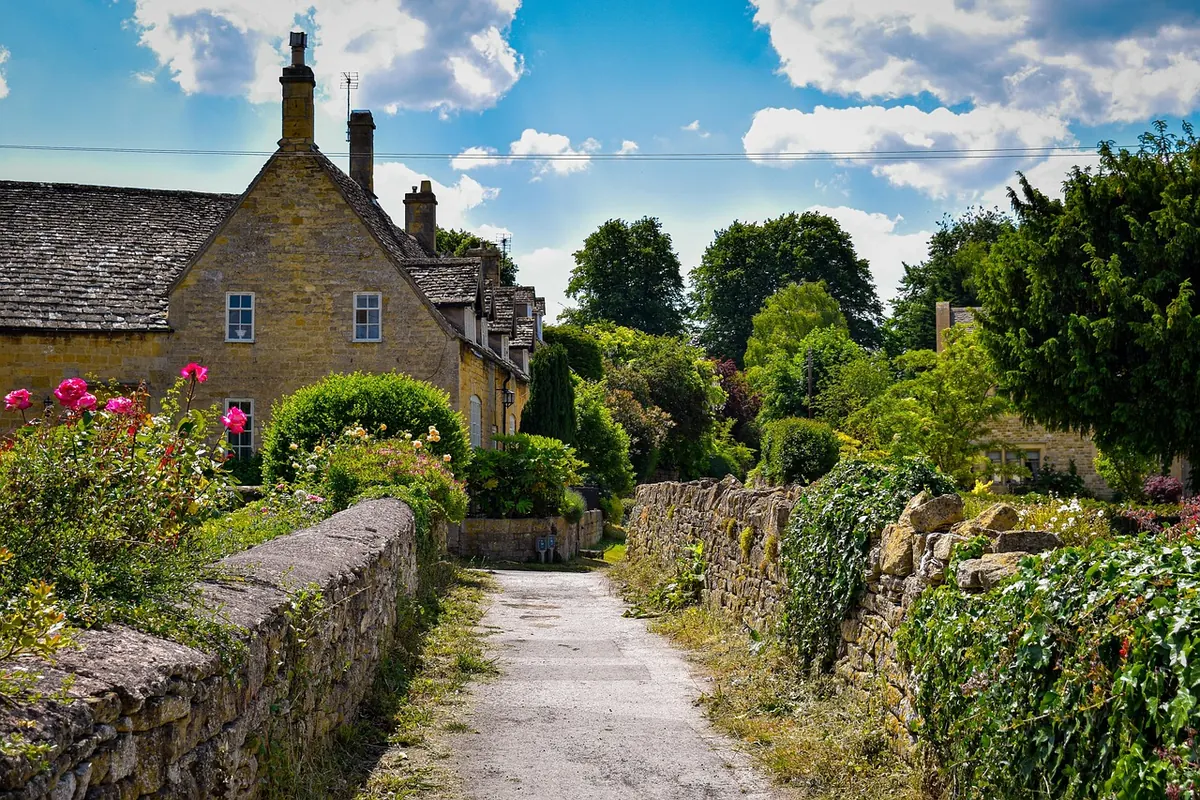
Follies of the Cotswolds: A Weekend Driving Route for Architecture Lovers
Broadway Tower draws the coach parties and the queue for the car park. The rest of the Cotswolds' follies get a couple of walkers, a dog and a thermos. That contrast is the appeal. The route below links sham castles, a rococo garden stuffed with eyecatchers, a Victorian tower hidden in a nature reserve and one gloriously late folly on a hill in Oxfordshire — most of them within an hour of one another.
It works best over two days with a car and a pair of walking shoes. Nothing here is strenuous, but almost everything involves a rough path, a stile or a spiral staircase. You will also need a certain tolerance for the British weather, which can turn a gentle amble into a mud bath with very little warning.
Day one: Bath's fringe, where the Cotswolds begin
Start on the southern edge of the Cotswolds, where Bath's terraces give way to wooded valleys. Brown's Folly, a stout early Victorian tower above Bathford, sits inside a nature reserve. The climb up through the woods takes about twenty minutes and the view down the Avon valley earns it. Bring proper shoes; the path is muddy for much of the year. The tower itself is a plain, muscular thing, built in 1846 as a lookout and a folly, and it has the air of a building that knows it is not beautiful but is determined to be useful anyway.
Then head up onto Lansdown for Beckford's Tower, a slender neo-classical belvedere built for the eccentric collector William Beckford between 1825 and 1827. It is not a ruin and not a castle; it is a giant telescope of a building, designed so Beckford could look down on his books, his pictures and his landscaping schemes from above. The tower is now run by the Bath Preservation Trust, and the climb to the belvedere is worth it for the view over Bath's crescents and the Somerset coalfield beyond. Check opening times before you go; it is not always open on weekdays out of season.
From there, drop down to Claverton Down for the Sham Castle, a crenellated screen wall on a hilltop that looks like the remains of a medieval fortress but was built in 1762 as an eyecatcher for Ralph Allen's townhouse. It is a facade, a piece of stage scenery in stone, and that is precisely the point. You cannot go inside, but you can walk around it and admire the way it frames the city below. If you have time and a taste for the absurd, Midford Castle, a triangular sham castle south of Bath, is a further twenty-minute drive and a steep walk; it is private, but the exterior is visible from the footpath.
Finish the day in Bath, where you can eat well and sleep in a city that is itself a piece of architectural theatre.
Day two: Rococo whimsy and a late, great folly
Head north into Gloucestershire for Painswick Rococo Garden, the only surviving complete rococo garden in England. It was laid out in the 1740s by Benjamin Hyett as a pleasure ground of follies, alcoves, and contrived views. The garden is a masterclass in the rococo impulse: nothing is straight, everything is theatrical. Look for the Eagle House, the Red House, and the Pigeon House, each one an eyecatcher designed to be seen from another part of the garden. The snowdrop displays in late winter are famous, but the follies are there all year. Allow two hours at least; the paths are steep in places and the café is a good spot for lunch.
After lunch, drive east to Faringdon, in Oxfordshire, for Faringdon Folly, a 100-foot concrete tower built in 1935 by Lord Berners, the composer, novelist and eccentric. It is gloriously late, unapologetically modern, and sits on a hill above the town. The climb is short but steep, and the reward is a panorama over the Thames Valley and the White Horse at Uffington. Lord Berners reportedly built it to annoy his neighbours, which is as good a reason as any for a folly. The tower is open on some weekends and bank holidays; check before you go, but the walk up the hill is worth it even if the tower is locked.
If you have energy left, Broadway Tower is nearby, but it is the one place on this route where you will share the view with a coach party. Save it for a weekday morning, or skip it and keep the contrast. The point of this weekend is not the famous folly; it is the quiet ones.
Follies are buildings built for pleasure, not for use; they are the architectural equivalent of a joke told in stone, and the best ones are told with a straight face.
Practicalities: parking, tickets and timing
- Brown's Folly: Free. Small car park on Bathford Hill; the nature reserve is open all year. Wear boots.
- Beckford's Tower: Small charge for the tower and museum. Limited opening; check the Bath Preservation Trust website before setting out.
- Sham Castle: Free. Roadside parking on Claverton Down; a short walk across a field. No facilities.
- Painswick Rococo Garden: Charge for entry. Large car park, café, toilets. Open daily in season; check winter hours.
- Faringdon Folly: Free to walk up the hill. The tower itself opens on selected weekends; a small donation is usually requested.
- Driving: Bath to Painswick is about an hour; Painswick to Faringdon is about an hour; Faringdon to Broadway is about forty-five minutes. The route is easily reversed.
- Best time: Spring and autumn for colour and fewer people. Avoid summer weekends if you want the follies to yourself.
Where to eat and stay
Bath is the obvious base for the first night, with more restaurants and hotels than you can shake a guidebook at. Try the King William for a proper pub lunch, or the Garrick's Head for something smarter. In Painswick, the Painswick Hotel and the Falcon both do good food and comfortable rooms. Faringdon has the Bell and the Old Crown, both reliable for a post-folly pint. If you want to stay in the middle of the route, Cirencester is a good compromise, with plenty of parking and a reasonable choice of beds.
A note on folly-spotting
When you are looking at a folly, ask yourself what it was pretending to be. A castle that never had a garrison, a tower that never needed a view, a ruin that was built new: these are buildings that exist for the eye and the imagination. Look for inscriptions, dates, and heraldic devices. Look for the way the building is placed to be seen from a house, a road, or another part of a garden. And look for the moment when the joke wears off and the building becomes simply a strange, beautiful thing in the landscape.
The Cotswolds are full of these moments. You just have to know where to park.
Photo: HarryJBurgess / Pixabay