October 07, 2026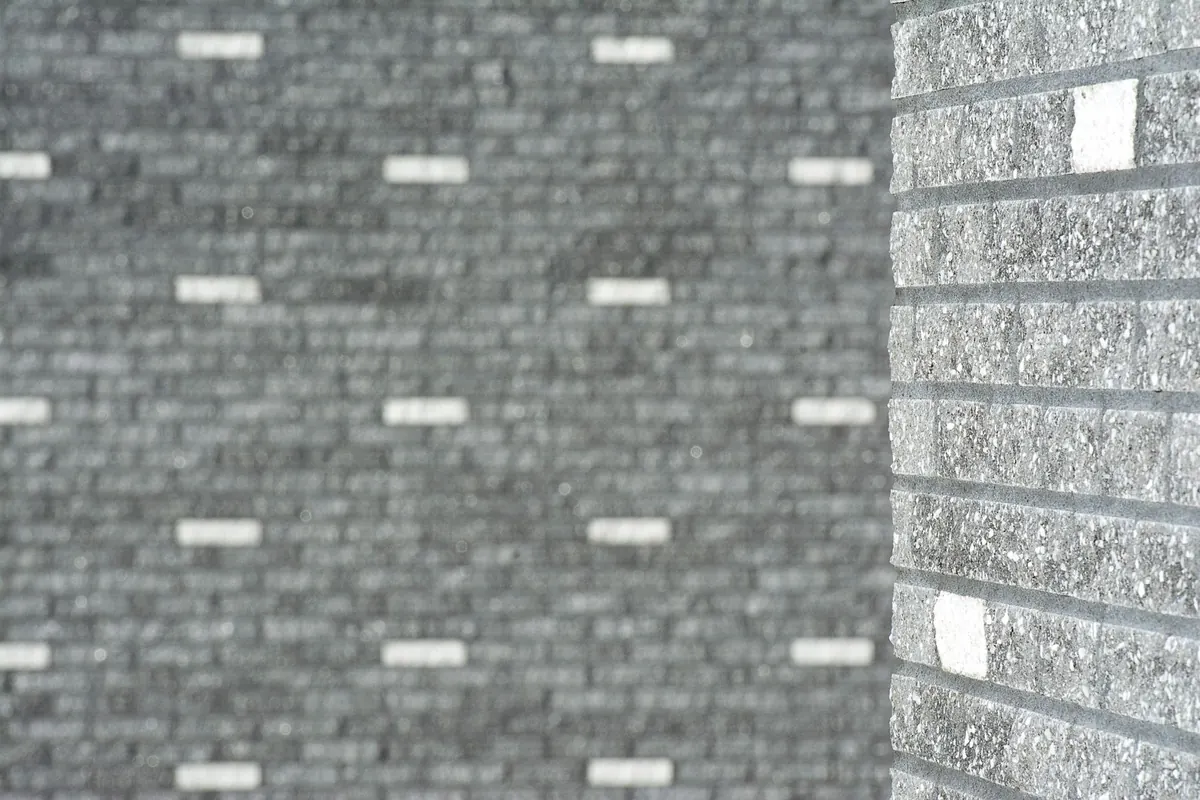
Stand close enough to a folly and it usually stops pretending. The sham ruin that read as medieval from the drive turns out, at arm's length, to be a brick carcass wearing a stone coat. That is not a disappointment; it is the most useful thing the building can tell you. Brick and stone were never interchangeable, and the choice between them carries a rough date, a rough budget and a fairly precise social register.
Reading the wall before the guidebook
Start with what you can touch. Brick tells you about clay, transport and tax; stone tells you about a quarry, a cart and a mason's bill. Coursing heights, joint widths, the finish of a face and the colour of a brick are all evidence, and often easier to read than an estate archive with a missing plan.
Brick: quick, cheap and taxed
Brick was the practical choice across much of lowland England, where clay was plentiful and good stone had to be carted. A small tower or eyecatcher could go up in a season, using brickearth dug and fired near the site and laid in a soft lime mortar that tolerated movement.
Tax left its fingerprint. A brick tax ran in Britain from 1784 to 1850 and was charged on the number of bricks rather than their volume, so makers produced larger ones. Chunky, coarse bricks with wide joints in an early nineteenth-century folly are often explained that way. After repeal, sizes settled back and machine production gradually replaced hand-moulding, giving later work a tighter, more uniform look.
Brick variety matters enormously when matching: London stocks made with ash, gault bricks from the eastern clays, hard reds, orange rubbers for arches. One wall can hold half a dozen colours.
Stone: quarried, carted and quietly expensive
Stone was rarely just a material; it was a location. Before canals and railways made heavy goods cheaper to move overland, stone travelled badly on bad roads. That is why follies in stone country are built from the rock underfoot: limestone in the Cotswolds and Derbyshire, sandstone in Yorkshire and the Welsh borders, granite in north-east Scotland, flint with stone dressings across parts of East Anglia.
Facework tells you about money. Rubble walls — irregular stones bedded in thick mortar — were the economical option. Ashlar, cut to precise blocks with fine joints, cost far more in mason's time, and tooling marks on the face add another layer of expense and date. Then weathering takes over. Limestone dissolves and hollows; sandstone scales along its bedding; granite largely ignores the weather and outlives the mortar holding it.
What the choice announced
Brick was never automatically the poor relation. Polite Georgian and early Victorian building used it constantly, then hid it behind stucco, or dressed it with mathematical tiles to imitate brick or stone. Brick was the frame; the render was the costume. Nor is brick automatically earlier than stone — the two ran side by side for centuries.
Stone announced older, landed confidence, often because the estate owned the quarry and the cart. A sham castle in dressed limestone said one thing; the same plan in common brick said another, and the difference was understood by everyone who saw it. The Gothic Revival blurred the lines deliberately: a "ruined abbey" of the 1790s may be brick with stone window surrounds, built new to satisfy the Picturesque eye rather than the archaeologist.
Where the two meet
Mixed construction is the norm rather than the exception. The commonest pattern is a brick carcass with a stone face — economy inside, prestige outside. Others include stone quoins on brick corners, brick infill between stone piers, brick arches over stone openings, and flint panels framed by stone bands. Each is a way of buying an expensive effect at a discount, and each leaves a tell. Stone quoins at the corners of a brick wall, for instance, often stop short of the full height or are set with slightly different joint widths, because the mason was working to a budget. Flint panels framed by stone bands are another compromise: the flint was free or cheap, the stone was the frame that made it respectable.
Repair: the material's second autobiography
How a folly has been repaired is often more revealing than how it was first built. Brick and stone demand different care, and getting it wrong leaves scars that read like a diary of changing fortunes and changing tastes.
Old brick needs lime mortar, which is soft, breathable and sacrificial. Hard cement pointing, common from the mid-twentieth century onward, traps moisture inside the brick and causes the face to spall away. If you see a brick folly with crisp grey cement joints and a rash of missing faces, you are looking at a repair campaign that did more harm than good. Stone is more forgiving but still particular. Repairs should use stone from the original quarry or as close as possible; a patch of wrong-coloured limestone or a block of slate instead of sandstone will weather differently and shout its date.
Repairs also reveal status. An estate with money could afford to indent new stone, matching the old. A folly that has been patched with brick where stone once was, or rendered over entirely, often signals a change of ownership, a decline in fortune, or a utilitarian phase when the building stopped being decorative and started being useful.
A field checklist for dating and diagnosis
When you are standing in front of a folly and want to read it properly, work through these steps in order:
- Look at the bricks first. Measure a few. Large, coarse bricks with wide joints suggest the tax years or earlier. Uniform, machine-made bricks suggest later nineteenth century or beyond.
- Check the mortar. Lime putty or lime mortar with soft, brushed joints is likely original or a sympathetic repair. Hard cement pointing is a later intervention.
- Identify the stone. If you can, name it. Local limestone, sandstone, granite or flint tells you what was underfoot. Imported stone tells you about canals, railways or deep pockets.
- Study the junctions. Where brick meets stone, look for quoins, arches, bands and plinths. These are where the money was spent or saved.
- Read the repairs. New stone that has not weathered in, brick patches in a stone wall, or render hiding everything — each is a clue to later history.
- Compare with the neighbourhood. A folly is never alone. The local church, farmhouse and boundary walls give you a baseline for what was cheap, what was fashionable and what was available.
Put those observations together and the building stops being a puzzle. It becomes a bill, a date and a social statement — usually all three at once, and usually in a single wall.
Photo: Jan van der Wolf / Pexels